
Rotatory Grading Sifter

SFJH Rotatory Grading Sifter Introduction

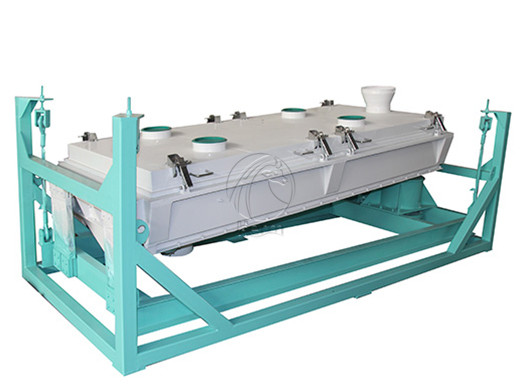
The rotary vibrating screen is mainly used for pre-cleaning or grading of raw materials in milling, feed, chemical, food, oil, and other industries. By replacing the sieves of different apertures, it can granular materials such as wheat, corn, rice, oilseeds, etc.

In addition, they can also be widely used for screening and grading feedstuffs and finished products in cereal and food processing, chemical engineering, sugar engineering, mining, and paper production industries.
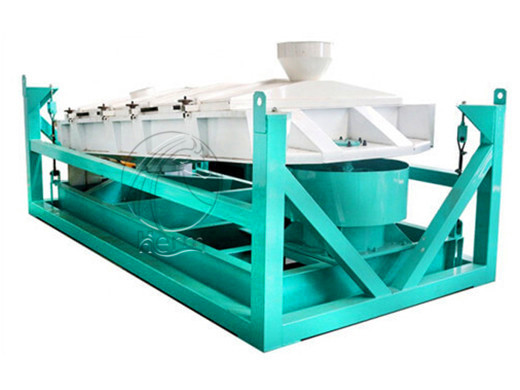
feed_pellet_sieving_machine
feed_pellets_screening_machine (3)
SFJH Rotatory Grading Sifter Advantages

1. It is suitable for the classification of granular and crushed materials, the secondary recovery and crushing process, and the cleaning and classification of some granular and powdery materials.

2. Simple and convenient screen pressing mechanism, quick screen change.

3. The transmission device operates in a gearless transmission mode, without oil lubrication, to avoid oil leakage.

4. Using counterweight, small vibration, and low noise.

5. The tail elastic support design effectively assists the vibrating screen to maintain balance, reduces noise, and greatly improves screening performance.

6. Optional double-layer sieve, triple-layer sieve, double-feed double-layer sieve (can be customized according to customer requirements).
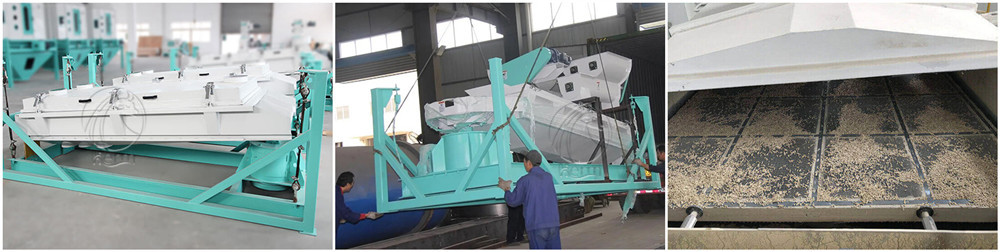
feed_pellets_screening_machine

SFJH Rotatory Grading Sifter Working Principle

The power is transmitted to the driving device by the motor through the V-belt, and the driving device drives the screen body to a certain slope. The driving device is equipped with an eccentric device so that the motion trajectory of the screen body from the feed end to the discharge end gradually changes from horizontal circular motion to elliptical motion, and finally to approximate reciprocating linear motion. 


The material enters the sieve body from the feed port and is quickly and evenly distributed on the entire screen surface width under the action of the circular motion of the feed end of the sieve body, and automatically grades. Therefore, the material with a smaller particle size below the material layer is quickly screened, while the material with a larger particle size above moves to the lower end (discharge end) along the slope of the screen body. It is used in poultry feed, chicken feed, bird feed, cattle feed, sheep feed, pig feed manufacturing plants, and woody biomass pellet production plants.

Comments

Popular posts from this blog

Ethiopia’s Animal Feed Market in 2024: Growth, Trends, and Opportunities for the Future

Ethiopia Animal Feed Market Analysis 2024: Trends, Challenges, and Opportunities With its immense agricultural potential, Ethiopia is one of Africa's fastest-growing economies. Agriculture, particularly livestock farming, is dominant in the country’s economic growth. The animal feed market in Ethiopia is a vital component of this expansion, driven by a growing demand for high-quality animal products, including meat, milk, and eggs. This article comprehensively analyzes the  2024 Ethiopian animal feed market , exploring the current trends, challenges, opportunities, and prospects. Market Overview With a population of over 120 million people,  Ethiopia’s livestock sector  is one of the largest in Africa, featuring cattle, sheep, goats, poultry, and camels. However, livestock productivity remains low, largely due to inadequate nutrition, poor management practices, and limited access to high-quality animal feed. The  animal feed industry  in Ethiopia is experie...

Is It Profitable To Invest In Feed Pellet Mill Line In Iran?

Is it profitable to invest in  a  feed pellet mill   line   in Iran? The answer is yes. Iran has major plans for modernising its domestic feed industry. Besides modernising the feed industry, Iran has set its sights on exporting large quantities of feed across the Middle East. Herm Machinery talked with Dr Majid Movafegh Ghadirly, Chairman of the Iran Feed Industry Association. What Is The Capacity Of Iran's Feed Production Per Year And What  Is Your Forecast For Production In 2030? “The established production capacity of Iran's animal feed industry is 21 million tonnes of production per annum. However, Iran’s actual production performance was around 11 million tonnes in 2019, 6.3 million tonnes of which was livestock feed, 4.2 million tonnes poultry feed and 400,000 tonnes aquaculture feed. Also, around 100,000 of feed was produced for other species such as camels, ostriches, turkeys, pets, etc. By 2030, population growth is expected to drive domestic feed dema...

5 7t feed processing machine