What is The Wet Type of Fish Feed Mill Plant?
Our wet-type fish feed pellet production line is the complete procedure of a fish feed-producing plant, which includes a fish feed-making machine, fish feed crusher, fish feed mixer, fish feed dryer, and other equipment. It is used to produce a variety of materials into high-grade aquatic feed pellets for fish, catfish, shrimps, crabs, etc.
This wet-type fish feed plant is newly developed to meet the demand for intensive production of fish feed pellets which can process all kinds of grain powder into the high-quality aquatic pellet. With many specifications, this fish pellet plant can produce fish feed, pet feed, livestock feed, etc.
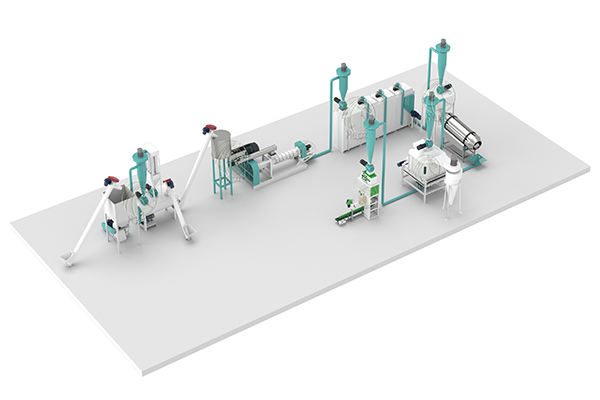
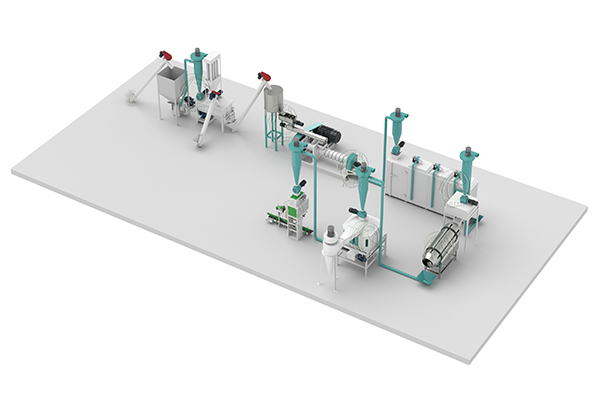
The complete fish feed production line includes a feed grinder, feed mixer, feed dryer, feed cooler, oil spray machine, and packing machine which are connected by conveyors or elevators. The feed pellet can float on the water for 12 hours at least. Adjusting the feed formulation also can make a sinking feed pellet. The pellet size is from 1mm to 12mm by changing the molds.
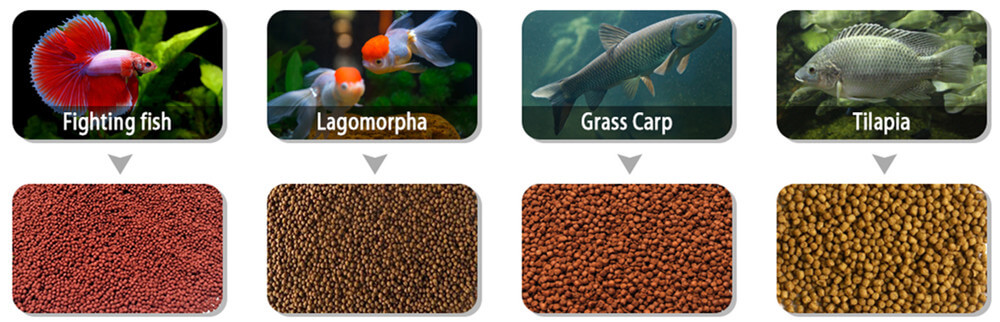
The products can have different shapes, unique flavors, rich nutrients, and fine textures to meet the different eating habits of animals. With Super automation control and high production efficiency, this fish feed production line is the best choice for medium and big-sized feed mills and breeding farms.
This wet-type fish feed production line can produce various kinds of pellets for different varieties of fish including Catfish pellets, CatCarp pellets, Halibut pellets, Trout pellets, Hemp pellets, CSL pellets, etc.
How To Make Fish Feed?
Grinding-Feed Hammer Mill
To produce high-quality fish feed pellets, fine grinding of raw materials is necessary. The finer the material is, the more surface area will be exposed, thus achieving great gelatinization in conditioning. The feed hammer mill is adopted in this fish feed pellet line, which can benefit users by the ideal crushing effect.
Mixing-Fish Feed Mixer
Efficient mixing is the key step in the fish feed pellet plant due to its direct influence on the feed pellet quality. Proper mixing will increase diet uniformity and improve feedstuff quality. Our mixing machine stands out with high mixing uniformity, CV≤5%, and no segregation.
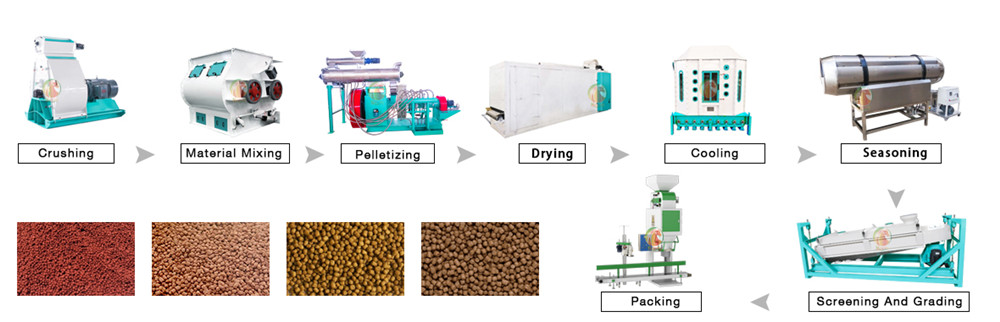
Extruding—Fish Feed Extruder
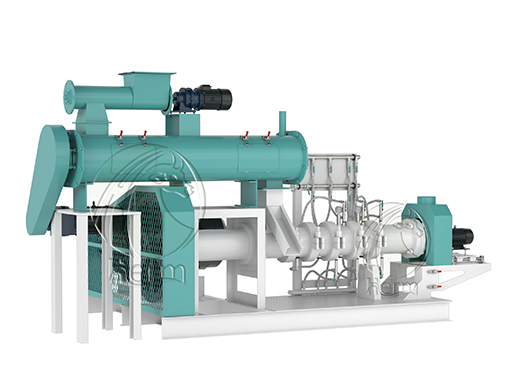
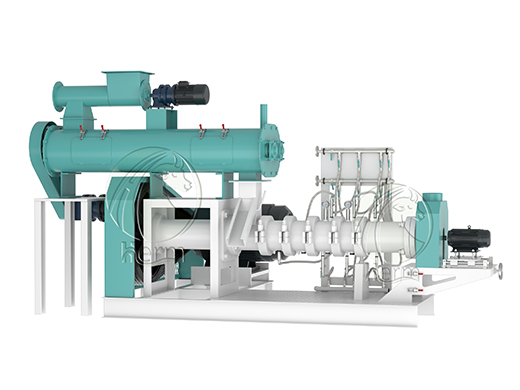
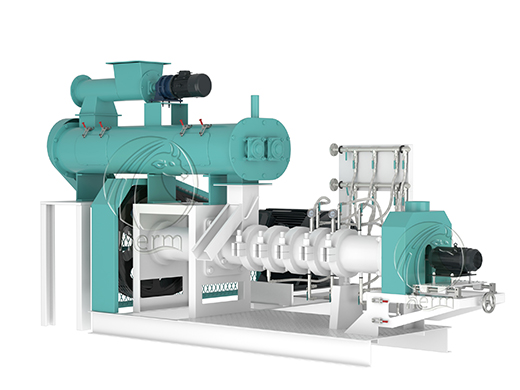
Extruding is the key process as it ensures that the feed formulation is in the correct quantities. A fish feed extruder is widely used for producing a variety of materials into high-grade aquatic feed pellets for fish, catfish, shrimps, crabs, etc. The final pellets have a unique shape and good taste, high nutrition, and smooth textures. For feeds of fish and shrimp, the floating time in water can be adjusted by the extrusion degree adjustment. The feed pellet diameter is 0.9-15mm. We have a wet-type fish feed extruder and a dry-type fish feed extruder for your choice.
Drying—Fish Feed Pellet Dryer
Featured by high drying uniformity and low breaking ratio, a mesh belt dryer is preferred to reduce the high moisture content of feed pellets coming out from the extruder.
Oil Spraying—Oil Coating Machine
Our oil coating machine is used for spraying the oil, grease, vitamin, etc. to the feed pellets' surface to increase the palatability of fish feed pellets. In the drum-type spraying machine, the additives can be contacted with the pellet surface sufficiently and sprayed evenly. After spraying, the fish feed pellets are balanced and rich in nutrition.
Cooling—Feed Pellet Cooler
The counter flow pellet cooler is used for cooling the feed pellets just coming out from the oil coating machine. It takes advantage of the counter-current cooling principle to cool the pellets with high temperatures and high humidity. It can avoid the shock cooling phenomenon when the cold air contacts the hot material, thus preventing the pellet from appearing to crack.
Packaging—Feed Pellet Packing Machine
As the last step in the fish feed pellet line, the packaging is optional according to your needs. The automatic feed pellet packing machine is always combined with the transport mechanism and the sewing machine to constitute the automatic feed pellet weighing and packing system used in animal feed factories.
We can design and supply different capacities of the complete line according to customers’ requirements. Usually have 200kg/h, 350kg/h, 500kg/h, 800-1000kg/h, and 2000kg/h.
Comments
Post a Comment