
SLHS Shaft Paddle Mixer

SLHS Shaft Paddle Mixer Introduction

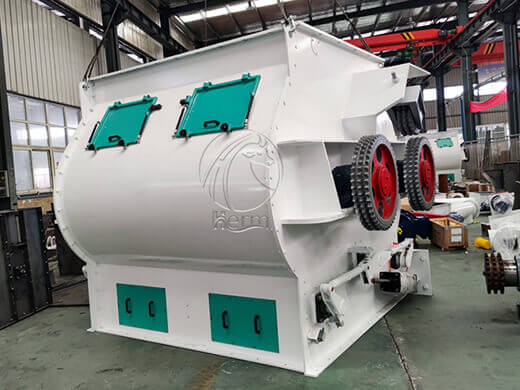
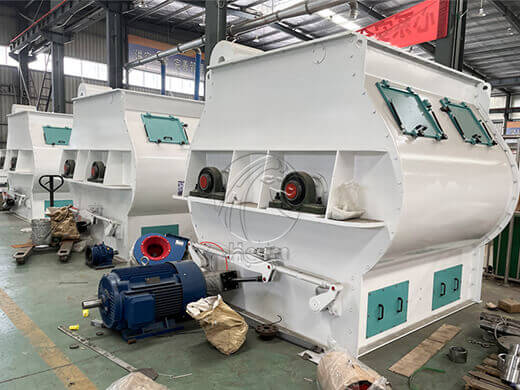
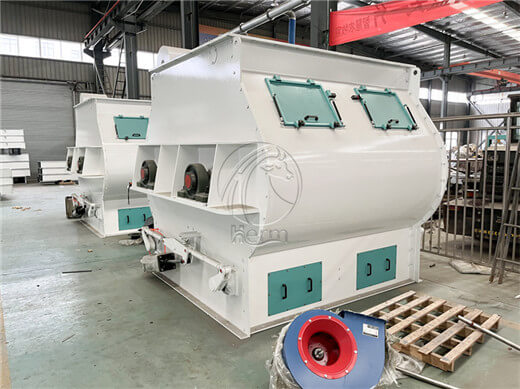
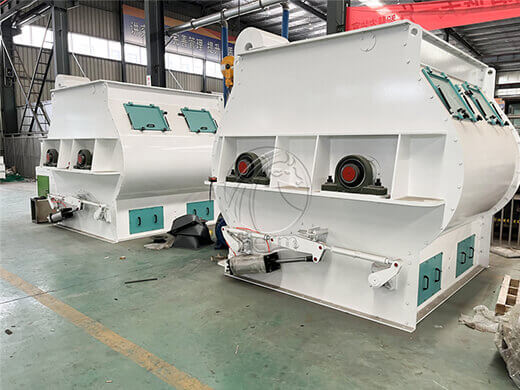
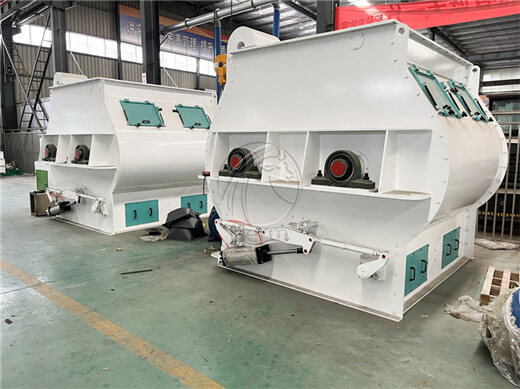
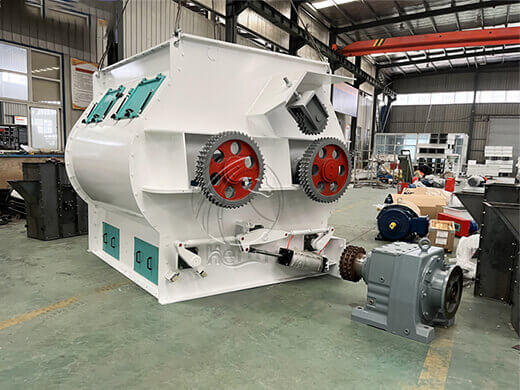
Herm Machinery's latest dedicated double-shaft paddle mixer has many advantages. These feed mixers are very gentle on the product, have low energy consumption, high capacity, low space requirements, and flexible filling. 


It can be equipped with multiple atomizing nozzles for liquid addition, which is convenient for maintenance. Herm Machinery's newest double-shaft paddle mixer consists of paddles on double shafts mounted in a "W" shaped trough. The specific speed of the shaft combined with the overlapping motion and paddle design facilitates fast fluidization and ensures excellent particle transport.
feed_mixer_cost
feed_mixer_for_sale

SLHS Shaft Paddle Mixer Advantages

1. Short Mixing Time: An average mixing cycle for dry mixing can be as follows: filling 20-30 seconds, mixing 40-60 seconds, and discharging 10-20 seconds. This gives a total cycle time of 1.5 – 2 minutes.

2. Lower Production And Maintenance Costs: The benefits of the mechanical fluidizing zone are gentle mixing, no segregation, and a very short mixing time. This gives savings in terms of minimal wear and tear and low energy consumption. Maintenance costs are also very low.

3. Easy Cleaning Of Mixer: Side access doors for entry into the mixer interior can be provided. These also provide access for cleaning the mixer internals after the completion of the batch.

4. Higher Throughput: Because of the short mixing time, this results in savings, both in investment costs and space requirements.

5. Reliable Scale Up: The simple design and mixing principle ensure that lab test results can be reliably scaled up to production levels.

6. Gentle Mixing: Shear is very low, As a result, extremely fragile materials can be mixed with minimal degradation.
feed_mixer_manufacturer
feed_mixer_supplier

SLHS Shaft Paddle Mixer Working Principle

The material in a double shaft paddle mixer is affected by two opposing rotating rotors which are in compliant motion. On the one hand, the paddle drives the animal material to rotate counterclockwise along the inner wall of the machine tank. 


On the other hand, the paddle animal turns from side to side, creating a zero-gravity zone where the two rotors meet. In this area, regardless of the shape, size, and density of the material, it can make the material float in an instant weightless state, so that the material can form continuous turns in all directions in the machine tank, which can be staggered and cut each other to achieve fast and gentle, The effect of uniform mixing.
feed_mixer_supplier (2)


feed_mixer_price

Comments

Popular posts from this blog

Ethiopia’s Animal Feed Market in 2024: Growth, Trends, and Opportunities for the Future

Ethiopia Animal Feed Market Analysis 2024: Trends, Challenges, and Opportunities With its immense agricultural potential, Ethiopia is one of Africa's fastest-growing economies. Agriculture, particularly livestock farming, is dominant in the country’s economic growth. The animal feed market in Ethiopia is a vital component of this expansion, driven by a growing demand for high-quality animal products, including meat, milk, and eggs. This article comprehensively analyzes the  2024 Ethiopian animal feed market , exploring the current trends, challenges, opportunities, and prospects. Market Overview With a population of over 120 million people,  Ethiopia’s livestock sector  is one of the largest in Africa, featuring cattle, sheep, goats, poultry, and camels. However, livestock productivity remains low, largely due to inadequate nutrition, poor management practices, and limited access to high-quality animal feed. The  animal feed industry  in Ethiopia is experie...

Is It Profitable To Invest In Feed Pellet Mill Line In Iran?

Is it profitable to invest in  a  feed pellet mill   line   in Iran? The answer is yes. Iran has major plans for modernising its domestic feed industry. Besides modernising the feed industry, Iran has set its sights on exporting large quantities of feed across the Middle East. Herm Machinery talked with Dr Majid Movafegh Ghadirly, Chairman of the Iran Feed Industry Association. What Is The Capacity Of Iran's Feed Production Per Year And What  Is Your Forecast For Production In 2030? “The established production capacity of Iran's animal feed industry is 21 million tonnes of production per annum. However, Iran’s actual production performance was around 11 million tonnes in 2019, 6.3 million tonnes of which was livestock feed, 4.2 million tonnes poultry feed and 400,000 tonnes aquaculture feed. Also, around 100,000 of feed was produced for other species such as camels, ostriches, turkeys, pets, etc. By 2030, population growth is expected to drive domestic feed dema...

5 7t feed processing machine