The belt-type ring dies feed pellet machine is a large-scale feed pellet machine, which is used to make corn stalks, bean stalks, flower seedlings, sweet potato wine, clover, rape straw, etc. into cattle feed, pig feed, cattle feed, sheep feed, rabbits feed, chickens feed, ducks feed, etc. The ring dies feed machine is the preferred equipment for making feed in large and medium-sized feed factories and various livestock farms. It is suitable for granulation in feed mills, farms, and chemical industries. This ring dies feed grinder can make various materials into pellets for livestock feed, grass powder, and organic fertilizer materials.
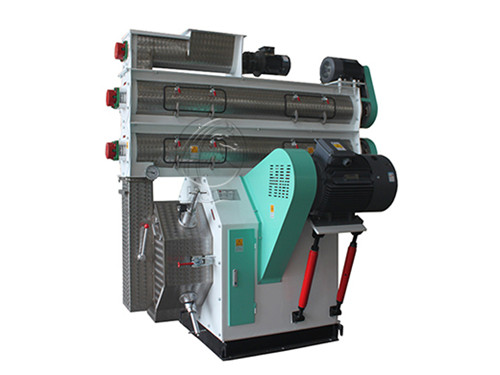
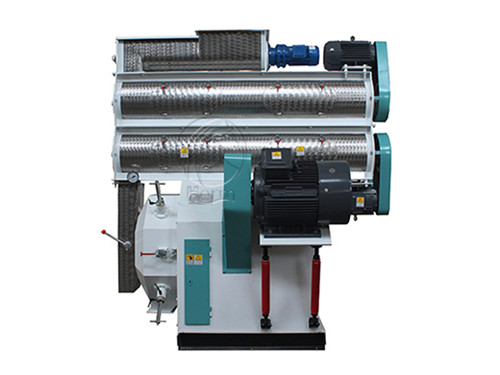
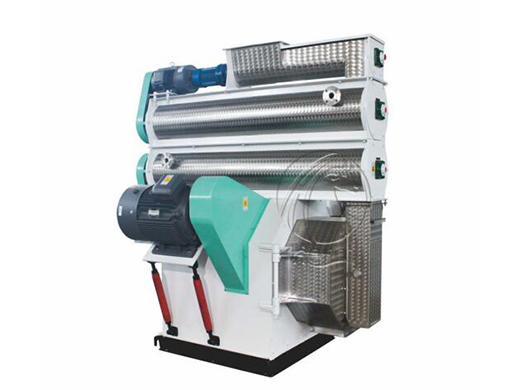
Our feed pellet machine is mainly composed of a feeder, modulator, pellet mill, lubrication system, and so on. The operation process requires that the mixing degree of the material should not exceed 15%. The material enters the feeding screw through the silo. Change the speed by adjusting the step-less speed regulation motor to make the material flow moderately. Then start tempering by mixing with steam through a paddle mixer. After tempering, the material temperature can be between 64°C and 84°C, and the humidity can be between 14% and 16%. Finally, the material enters the press box through the chute for granulation.
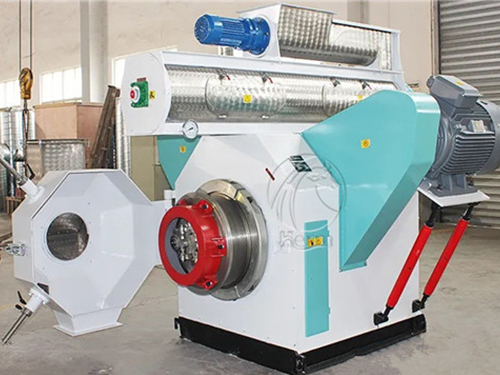
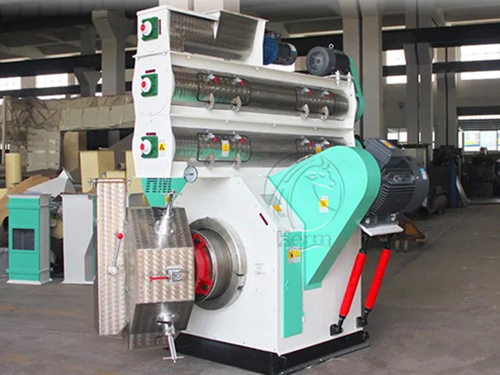
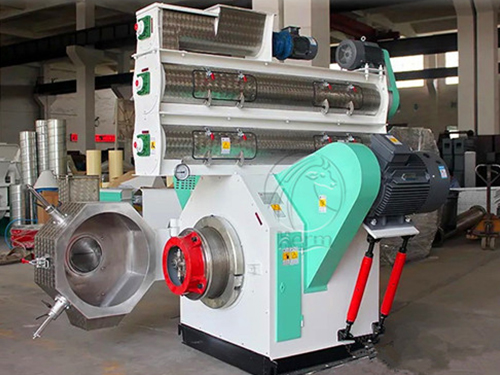
1. The feeder of our belt-type feed pellet machine adopts the originally imported frequency conversion controller, and the feeding is uniform and accurate.
2. The conditioner is all made of stainless steel to ensure that it will not deteriorate in the steam environment for a long time. It is also designed with inspection doors for easy cleaning and maintenance. During the tempering process, the feed is in full contact with the steam, and the degree of maturation of the feed is higher, which is conducive to the production of high-quality pellet feed.
3. The feed inlet is designed with a deflector, which can control the flow direction of the material (into the cutting chamber or directly discharged from the bottom). It is convenient to prevent materials with the wrong ratio from entering the granulation system.
4. The transmission belt adopts a high-strength SPB V-belt, the transmission is stable and reliable, and the noise is low.
5. The ring die is also made of 100% stainless steel for extra durability. There are a variety of apertures for you to choose from (φ1.5mm~φ12mm), and the compression ratio is customized according to your specific raw materials.
6. The quick-release hoop mold design makes replacement more convenient and greatly improves production efficiency.
7. One-piece spindle, easy to disassemble and assemble, good mechanical performance.
8. Scraper: 1 outer scraper, 2 inner scrapers. (Outer scraper is used to cut feed pellets with adjustable pellet length; inner scraper is used for mixing and deflection)
9. Reasonable lubricating system design (spindle, pressure roller): specially designed refueling holes to achieve non-stop refueling.

Comments
Post a Comment